
AI-Powered Agricultural Robotics Address Workforce Shortages
In an era marked by growing consumer demand and persistent labor shortages, agriculture is experiencing a technological renaissance. AI-powered agricultural robotics are no longer futuristic concepts — they are actively transforming how we plant, cultivate, protect, and harvest crops. By blending artificial intelligence, robotics, machine learning, and advanced sensors, today’s autonomous systems are sowing the seeds of a more efficient, sustainable, and resilient agricultural future.
Sowing the Seeds of Success
Traditional sowing — the act of planting seeds in the ground — is foundational to the entire agricultural cycle. However, it has also been one of the most labor-intensive and precision-dependent tasks on farms. Enter autonomous seeding robots: compact, intelligent machines equipped with precision GPS, AI vision, and soil-analysis sensors. These robots can determine optimal seed placement by analyzing soil composition, moisture levels, and terrain features in real time.
Unlike conventional equipment that relies on broad calibration, AI-driven sowing robots continually learn and adapt. They can adjust depth and spacing for each seed based on micro-variations in soil conditions, significantly enhancing germination rates and reducing seed waste. For growers, this combination of precision and automation is not just a matter of efficiency — it’s a competitive advantage in markets where margins are tight and consistency is paramount.
Weed-Pulling Robots: Precision Without the Chemicals
Weed management has traditionally relied on manual labor or broad-spectrum herbicides, both of which carry drawbacks. Manual weeding is physically demanding and costly, and extensive herbicide use raises environmental and health concerns while encouraging resistant weed species.
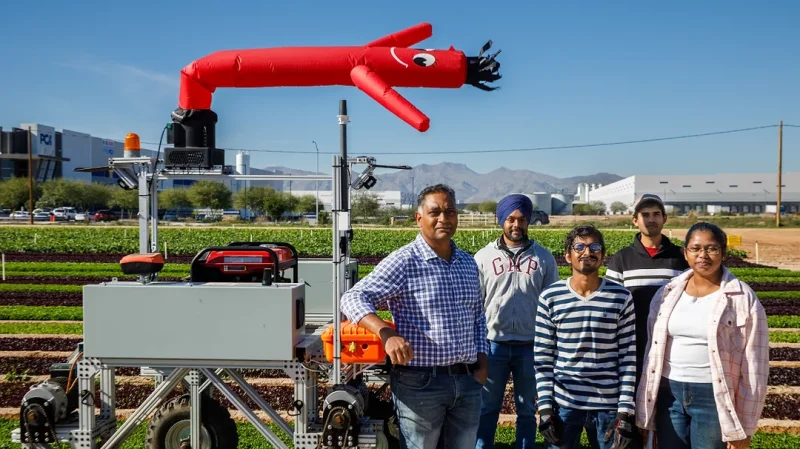
AI-powered weed-pulling robots represent an elegant solution. Fitted with high-resolution cameras and AI algorithms trained to distinguish crops from weeds, these robots navigate fields autonomously. Once a weed is detected, mechanical actuators pull it from the soil or precisely apply a tiny amount of herbicide only where necessary — dramatically reducing chemical usage.
The benefits are twofold: crops face less competition for nutrients and water, and environmental impact declines sharply. For sustainable agriculture advocates, these robots exemplify how technology can harmonize productivity with ecological stewardship.
A Changing Workforce
One of the most profound impacts of agricultural robotics is on the workforce itself. Labor shortages have plagued agriculture for years, driven by demographic shifts, migration patterns, and the physically demanding nature of farm work. AI-powered robotics do not eliminate jobs but shift the nature of work toward higher-skill opportunities.
Rather than spending long days performing repetitive manual tasks, agricultural workers are increasingly needed for roles such as robot maintenance, data analysis, system optimization, and agricultural engineering. These jobs command higher wages and require training, but they also foster a deeper integration between technology and traditional farming knowledge.
This transition does bring challenges: farmers must invest in training programs, and rural communities must cultivate new educational pathways to support this emerging workforce. However, collaborative initiatives between universities, tech companies, and agricultural cooperatives are already underway, bridging the gap between tech and agronomy.
Sensors, Data, and Continuous Learning
Underpinning the success of agricultural robots are sensors and data systems that operate around the clock. These machines collect terabytes of information about crop health, soil conditions, weather patterns, and growth cycles. Through cloud connectivity and machine learning models, this data becomes actionable insight.
For example, AI systems can predict disease outbreaks before visible symptoms appear by correlating subtle changes in plant reflectance with historical disease data. Predictive analytics can also help farmers anticipate irrigation needs, optimize fertilizer application, and make informed decisions about harvest timing.
The continuous learning capabilities of these systems mean that each season enhances performance, creating a feedback loop that drives ongoing improvement.
Challenges and Future Prospects
Despite the promise of AI-powered agricultural robotics, challenges remain. High upfront costs can be a barrier for small and medium-sized farms. Connectivity issues in rural areas — especially limited broadband access — can impede real-time data transfer and cloud computing.
Moreover, integrating robotics into diverse crop systems (especially those not conforming to row planting) requires further innovation. Perennial crops, vineyards, and orchards present unique spatial challenges that standard robots struggle to navigate.
Yet innovation is rapid. Researchers and startups are already experimenting with swarm robotics — teams of small, cooperative robots that share tasks — and advanced AI models that can generalize across crop types and field configurations.
Cultivating Resilience Through Innovation
AI-powered agricultural robotics are rewriting the rules of modern farming. By addressing labor shortages with precision, efficiency, and scalability, these technologies empower growers to produce more with less — less labor, less waste, and less environmental impact. As the agricultural workforce evolves and technology becomes more accessible, the potential for a more resilient and sustainable food system comes clearly into view.
From smart seeding and autonomous weed control to data-driven decisions and new workforce opportunities, robotics is more than a tool — it’s a transformative force in agriculture’s next chapter.